
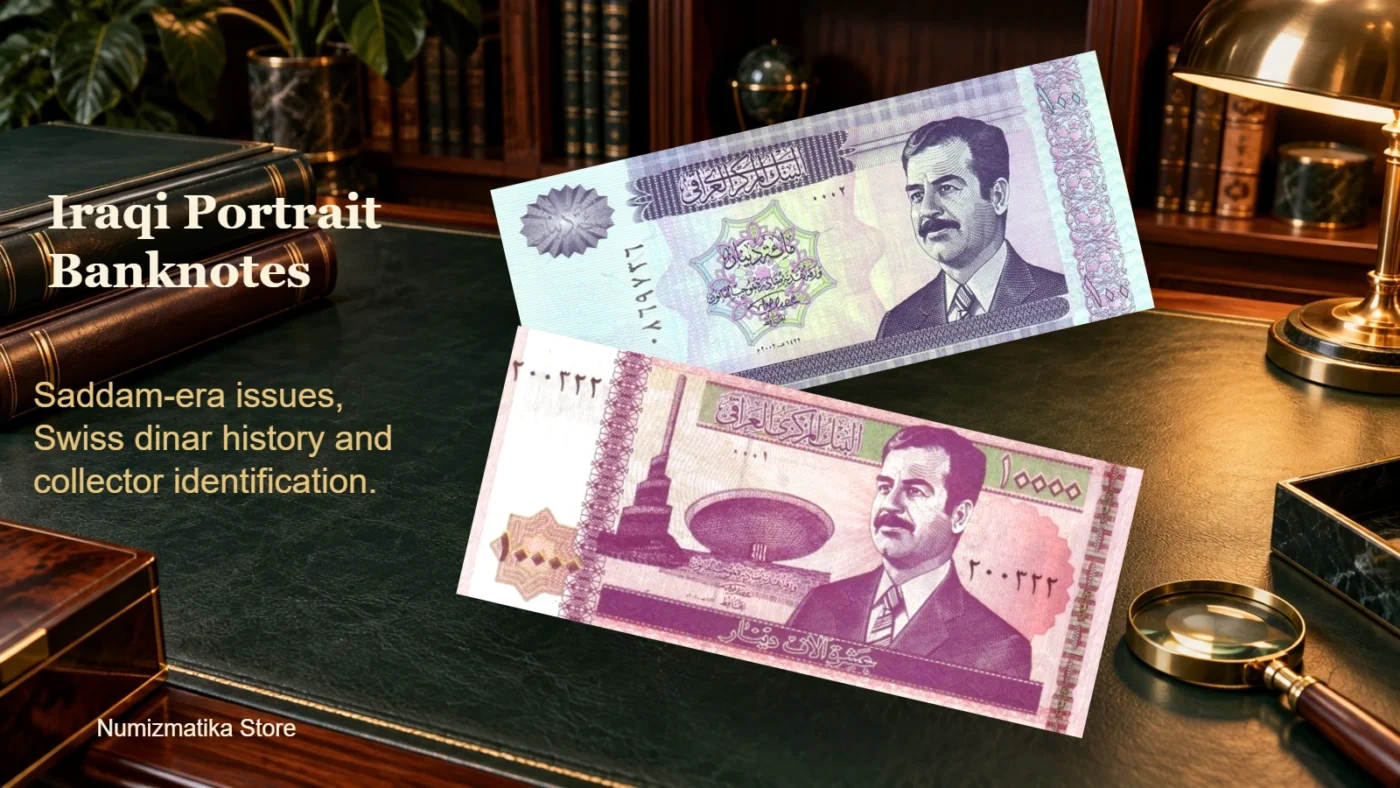
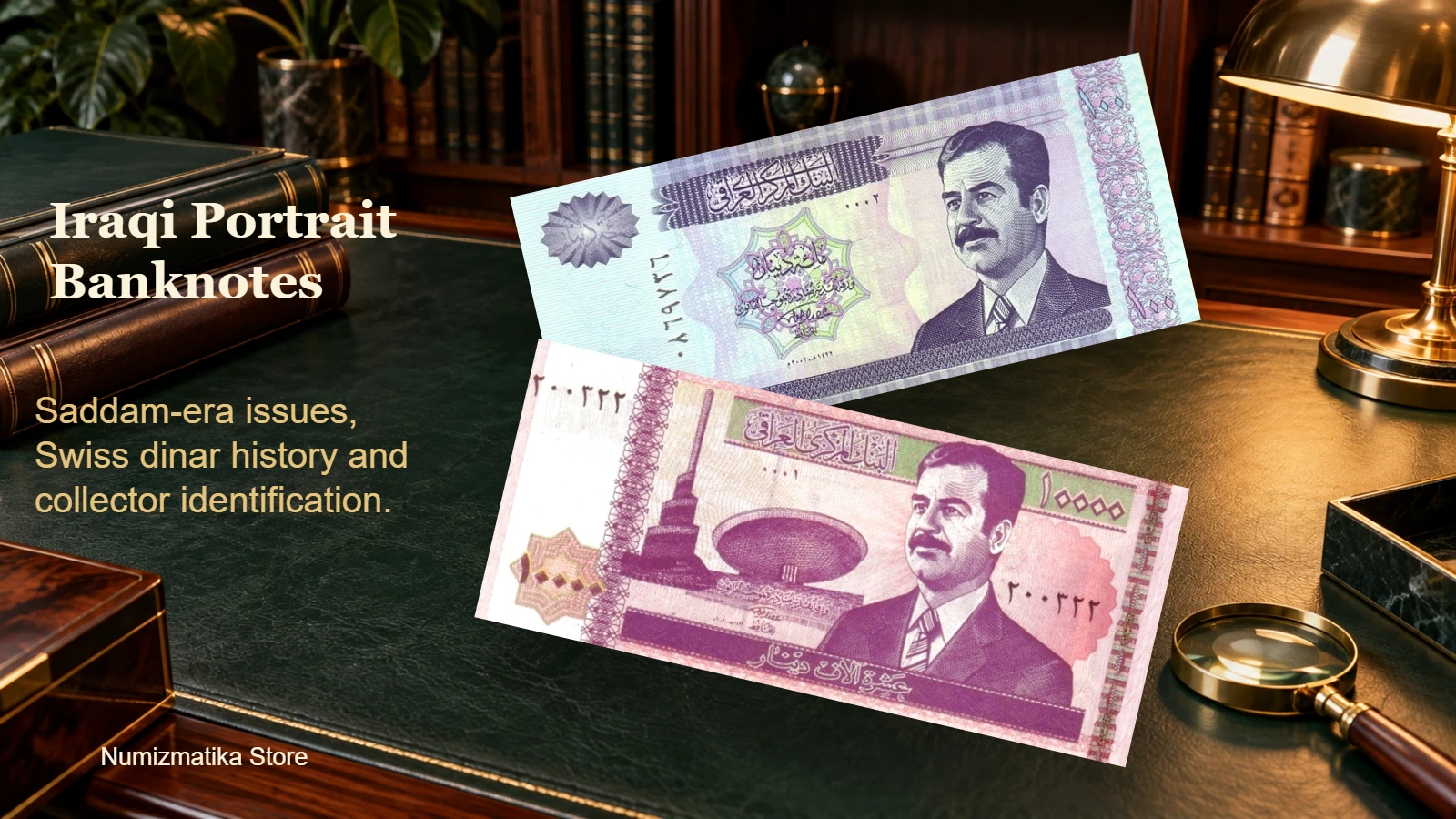
Saddam Hussein Iraqi dinar currency: identify the actual issue
Saddam Hussein Iraqi dinar currency covers more than a portrait and a denomination. A useful collector description also records the design, issue reference, date where established and condition. Avoid treating every older Iraqi note as one interchangeable historical type.
Begin by deciding whether your collection focuses on portrait issues, an earlier design group or the transition to the modern series. Clear boundaries make a small collection more informative. They also prevent two visually different 250-dinar notes from being mistaken for duplicates.
Swiss dinar and portrait issues were not a simple sequence
Historical accounts describe two currencies circulating in different parts of Iraq before the 2003 changeover. The term “Swiss dinar” referred to older notes used in the north, while another dinar circulated elsewhere. The distinction was regional as well as chronological.
Consequently, an album caption should not claim that all Swiss notes disappeared before all portrait issues began. Use the term as a historical identifier, then verify the particular design in a catalogue. The nickname alone does not establish that a note was manufactured in Switzerland.
The 2003–2004 changeover
The US State Department’s contemporary record dates the national currency exchange from 15 October 2003 to 15 January 2004. It explains that the new currency replaced both the old dinar and the Swiss dinar used in the north.
For collectors, this provides an important dividing line between historical groups and the post-2003 national series. It does not make every earlier note identical, and it does not turn a historical collectible into a current spending instrument. Keep the historical context separate from the sale price of an individual note.
Two listed portrait-note examples
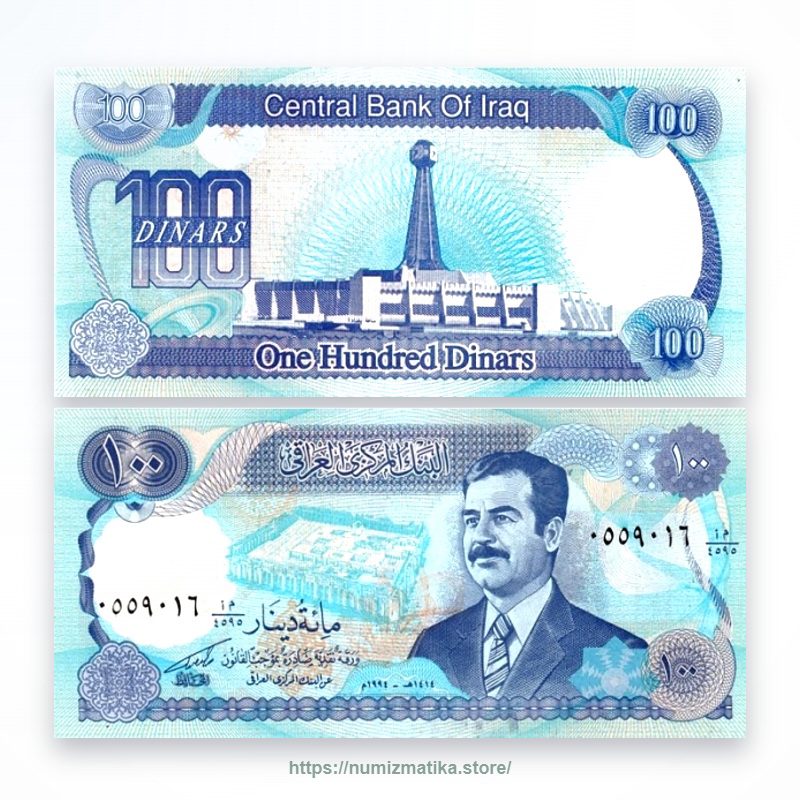
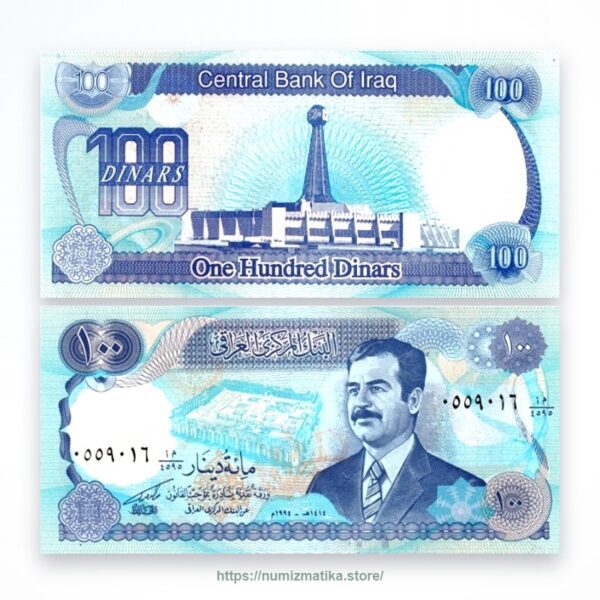
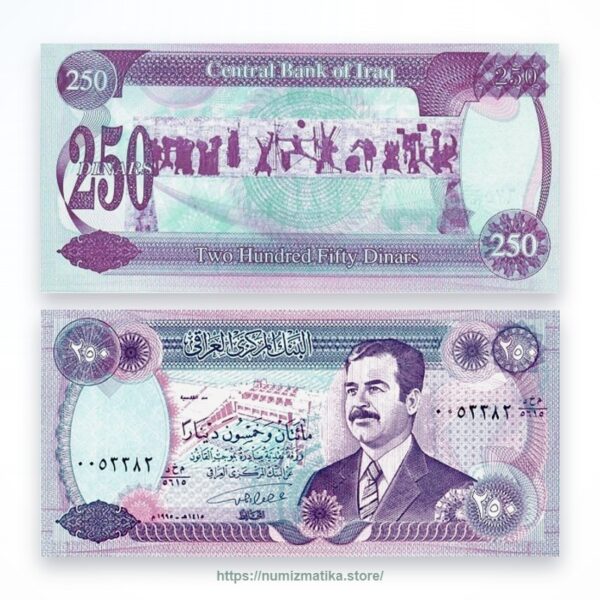
Numizmatika lists a 100-dinar portrait note identified as the 1994 Pick 84 type, and a 250-dinar portrait note identified as Pick 85. These are separate denomination and catalogue positions. The exact listing should determine which item you order.
Use the supplied photographs to compare the full layouts, inscriptions and reverse designs. A later 250-dinar note from the modern series is a different type despite the repeated value. Do not assign an issue date from the portrait alone or assume every note issued during a political period depicts the same person.
An identification worksheet for older Iraqi notes
Record the country and denomination first. Next describe both sides using observable features. Add the issue date only when the note or a reliable reference establishes it. Record the catalogue number separately from the serial number.
Then note condition and visible defects. Keep a copy of the purchase description and distinguish the seller’s attribution from your own confirmed observations. If the reference conflicts with the photograph, resolve the mismatch before buying rather than merging both descriptions into an invented variety.
Condition and authenticity require different checks
For grading, examine folds, corners, edges and surface wear. An UNC description concerns preservation; it is not a certificate from the issuer. An attractive circulated note may still be a worthwhile historical example when clearly described.
For authenticity, use reference information matched to the exact issue. Do not assume older notes have the same security features as modern ones. Watermark or UV observations are useful only in the correct context, and photographs cannot establish every physical characteristic. Ask specific questions when evidence is incomplete.
Build a historical collection without accidental overlap
A pair of different portrait denominations can form a focused beginning. Later additions might compare a verified earlier type with a modern note of the same face value. Label the dates and groups clearly so the album tells an accurate story.
Avoid the phrase “complete Saddam set” unless every included denomination and variety scope is defined. A seller’s two-note selection is not automatically comprehensive. Buy for the examples you want to study rather than for predictions about currency revaluation.
Frequently asked questions
Does “Swiss dinar” prove Swiss manufacture? No. Treat the nickname and the printer attribution as separate questions.
Are older and modern 250-dinar notes the same type? No. Denomination alone is insufficient for identification.
Can a portrait establish the exact date? No. Check the printed information and a reference matched to the specific issue.
Compare the relevant collector listings
Check each listing for the exact issue, condition and quantity. Prices and availability below come from the current product catalogue.
Iraqi Dinar Banknotes
Iraqi Dinar Banknotes
Sources and reference notes
- US State Department archive: New National Currency for Iraq
- IMF: Iraq country assessment, October 2003
Share this:

Your post is ready. Copy the suggested caption and open the platform. Paste the caption if you wish; you can also write your own.
Copy & Continue to platformBanknote source fields
Only stored source fields are shown. Catalog references, rarity and condition are not inferred. Hashtags are content-based, not verified trends.Publish directly to Instagram
Administrator only. Uses the configured official API connection.
Configure Instagram connectionPrepare an approved product design in Nova Composer. The original photograph and product gallery remain unchanged.
Open LuxuryAd ComposerNo original image is available.
Only original source photographs are used. Some platforms accept only the URL; copy your text and upload the image manually when needed.

